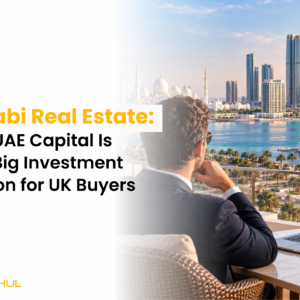


American interest in UAE property has historically centred almost entirely on Dubai. That is starting to change, and the shift is backed by numbers rather than sentiment. Abu Dhabi posted AED 142 billion in real estate transactions in 2025, a 48 percent jump on the previous year, then followed it with AED 117 billion in the first half of 2026 alone, up 112 percent year on year. For American investors weighing where their next international property allocation should go, Abu Dhabi has moved from an afterthought to a market worth serious analysis.
What Is Actually Driving Abu Dhabi’s Growth
Unlike a typical speculative property run, Abu Dhabi’s growth rests on five identifiable structural drivers. The city sits on some of the deepest sovereign capital pools in the world through funds like ADIA, Mubadala, and ADQ. It hosts a rapidly scaling AI and data centre sector, including a 5GW UAE-US AI campus unveiled jointly by the UAE and US governments and a $15.2 billion Microsoft investment running through 2029. Ownership rules have opened significantly, with freehold access for all nationalities across 50 designated investment zones. A wave of destination infrastructure, including the Guggenheim Abu Dhabi, Etihad Rail, and a Disney resort on Yas Island, is expanding the city’s global appeal. And supply is paced deliberately, with the top 10 developers controlling 90 percent of off-plan sales, avoiding the oversupply risk that has hurt other emerging markets.
Where the US Fits Into the Buyer Mix
The United States was the fourth-largest source of foreign direct investment into Abu Dhabi real estate in the first half of 2026, behind the UK, China, and Russia, and American buyers feature among the top resident-expat purchaser groups in the market. This is not a market Americans are discovering from scratch. The same tax advantages that have drawn US investors to Dubai (no annual property tax, no capital gains tax, and no local income tax on rental income) apply equally in Abu Dhabi, and the AI-driven jobs story in particular has a natural resonance with American investors already tracking the sector domestically.
The AI Connection US Investors Will Recognise
This is arguably the most distinctive part of the Abu Dhabi story for an American audience. The 5GW UAE-US AI campus, built in partnership with OpenAI, Oracle, Nvidia, Cisco, and SoftBank through G42, is the largest AI deployment of its kind outside the United States itself. Combined with a $49 billion AI investment fund closed by ADGM-based MGX in July 2026 and over $100 billion in AI-focused capital now held by ADGM entities, Abu Dhabi is positioning itself as a genuine extension of the US AI ecosystem rather than a separate, disconnected market. That compute and capital build-out is already translating into housing demand in business districts like Al Reem Island and Masdar City, as engineers, researchers, and fund managers relocate with their families.
The Numbers That Matter for ROI
Foreign direct investment into Abu Dhabi property reached AED 13.8 billion in the first half of 2026, up 309 percent year on year and already exceeding the whole of 2025. Residential sales value hit AED 70.4 billion in H1 2026, nearly triple the AED 25.3 billion recorded a year earlier. Apartments in repeat sales rose 20 percent year on year and villas rose 12 percent, with some communities like Al Reef posting apartment value gains above 40 percent. The luxury segment has moved particularly fast: 1,406 homes sold above AED 10 million in H1 2026, up from just 270 a year earlier, now accounting for over 41 percent of total residential value.
Abu Dhabi vs Dubai: Setting Expectations
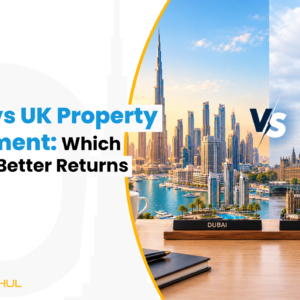
Abu Dhabi should not be viewed as competing directly with Dubai for an American investor’s attention. Dubai remains roughly six times larger by transaction value, AED 917 billion versus AED 142 billion in 2025, and offers far greater liquidity and choice across a large private developer base. Abu Dhabi instead offers a lower registration fee of around 2 percent versus Dubai’s 4 percent, a smaller number of government-backed master developers managing supply carefully, and a growth narrative tied more directly to sovereign capital and long-term infrastructure than to pure market momentum. For American investors, the sensible framing is Abu Dhabi as a diversifier alongside a Dubai holding, not a replacement for one.
Communities and Indicative Yields
Gross rental yields vary by community and asset type. Al Reef and Al Ghadeer offer 7 to 9 percent, among the highest in the market. Masdar City, aligned closely with the tech and sustainability sectors Americans are often already investing in domestically, offers around 8 percent. Al Reem Island, home to the ADGM financial free zone and notably excluded from the June 2026 rent freeze, offers 6.5 to 8.5 percent. Yas Island, anchored by Formula 1 and the upcoming Disney resort, offers 6 to 8 percent. Saadiyat Island, the cultural and luxury hub where the Guggenheim opens in December 2026, trades at lower yields of 4 to 6 percent but has shown some of the strongest capital growth in the market.
The Golden Visa for American Investors
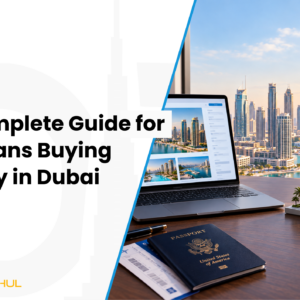
A property investment of AED 2 million or more, roughly USD 545,000, qualifies for a renewable 10-year UAE Golden Visa in Abu Dhabi on the same terms as Dubai, extending to spouse and children, with off-plan and mortgaged properties potentially eligible under current guidance. For Americans exploring the UAE as a long-term base as well as an investment, this means the residency decision does not need to dictate the city, and Abu Dhabi can be evaluated purely on its investment fundamentals.
Risks to Factor Into the Decision
Abu Dhabi’s momentum has come with real volatility. Second-quarter 2026 transaction value fell roughly 24 percent from the first quarter, and secondary market deals dropped 18 percent year on year. A rent freeze introduced in June 2026 caps rent increases outside ADGM areas indefinitely. Villa prices softened in some established communities even as apartments kept climbing. With 89 percent of residential value transacted off-plan, delivery risk from developers remains a genuine factor in underwriting any purchase.
Why Choose Dubai with Rahul
Finding the right property is only half the job. The other half is finding someone who can guide you through a foreign legal system, a different currency, and a market that moves fast. This is where Rahul comes in.
Rahul is the Associate Director at Unique Properties and has spent more than 14 years working exclusively in UAE real estate, including the Abu Dhabi market. In that time, he has sold over 100 properties, closed more than 3 billion AED in transactions, and worked with clients from over 100 different nationalities, many of them investing from overseas without ever setting foot in the UAE before completing the purchase. His success rate sits above 95 percent, and he has been recognised with multiple industry awards, including the Dubai Property Awards and the International Property Awards for Best Real Estate Consultant in Dubai.
What sets Rahul apart for overseas buyers specifically is the end-to-end support. He does not just show you listings. He advises on budget and goals, connects you with leading developers active in both Dubai and Abu Dhabi, and stays with you through site visits, legal documentation, and the final transfer of ownership. For an investor buying from thousands of miles away, deciding between Dubai and Abu Dhabi, or splitting an allocation between both, that local guidance matters more than almost anything else.
If you are ready to explore your options, working with an experienced advisor to invest in Abu Dhabi real estate from the US is the safest way to get a shortlist built around your budget, goals, and timeline.
Final Thoughts
Abu Dhabi has moved well beyond being a quieter alternative to Dubai. For American investors, particularly those already following the AI infrastructure story domestically, it offers a genuinely differentiated entry point into the UAE market, with strong fundamentals, sovereign backing, and the same tax and residency advantages that first drew US capital into the region.